
Sales strategy5 min read
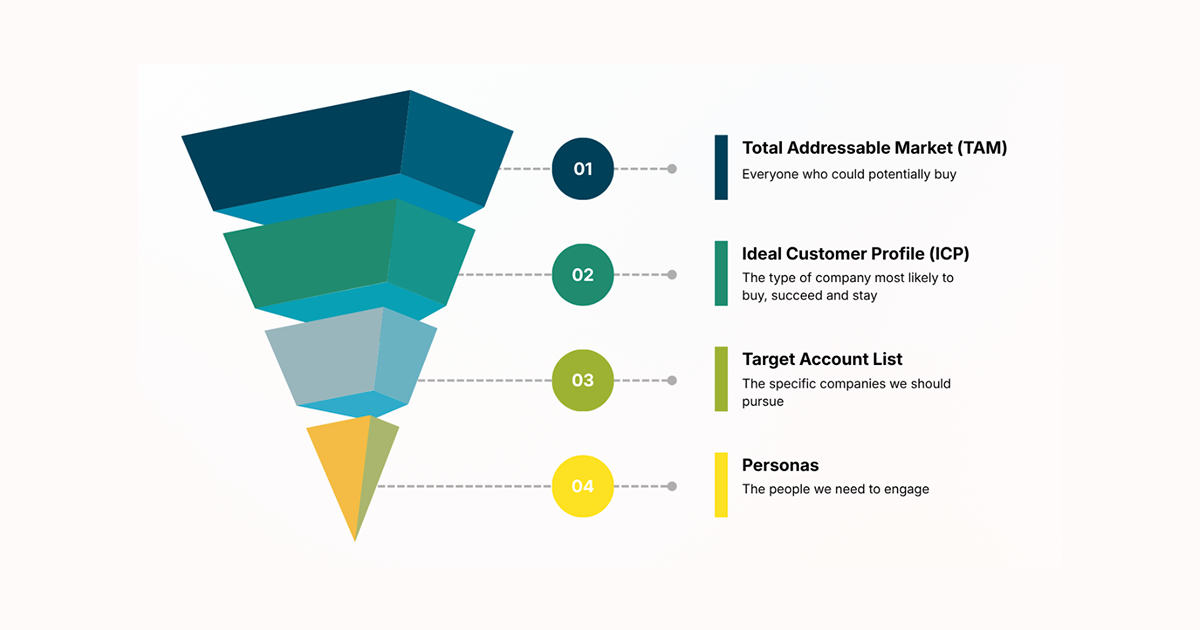
Stop Selling to Everyone: How to Define Your Ideal Customer Profile
The clearer you are about who you're selling to, the easier it becomes to build a predictable sales engine.
Founder-led sales is often the best way to get your first customers. But eventually, the thing that helped you grow can become the thing holding you back.
When starting out, founders are usually best placed to sell their products or services. In fact, it's the only way to do it until they know they have product-market fit. They know the product or service inside out, understand the problem they're solving and can adapt the pitch instinctively based on what they hear from prospects.
However, there comes a point where the founder can't be involved in every opportunity.
The challenge isn't simply hiring salespeople. It's turning what the founder has learned into a repeatable sales process that someone else can execute.
If deals only close when the founder is involved, growth will always be constrained by the founder's time.
The goal is to capture what currently lives in the founder's head and turn it into something the wider team can understand and repeat:
The shift is from relying on individual heroics to building a sales engine that produces consistent results.
When you are ready to move away from founder-led sales, you don't need to hire a full team with an SDR, AE and VP of Sales.
A capable full-cycle or hybrid salesperson who can prospect, run discovery and close deals may make much more sense.
Specialisation can come later, when sales volume justifies separating prospecting and closing roles.
Ask yourself: "What role do we need right now to create the next stage of growth?"
Your first sales hire is unlikely to inherit a perfectly documented sales machine.
They're going to have to help build it.
Look for someone who is:
Someone who has only succeeded inside a highly structured sales organisation may not necessarily be the right person for an early-stage business.
In the early stages, revenue is obviously important. But learning is an equally valuable output of the sales process.
Every conversation should help you answer questions such as:
The answers become the foundations of your sales playbook.
The transition from founder-led to repeatable sales isn't about taking the founder completely out of sales.
It's about changing their role.
The goal isn't to remove the founder from sales. It's to make sure the business doesn't depend on them to make every sale.
Blog
More reading on building a sales function that runs without you.
Sales strategy5 min read
The clearer you are about who you're selling to, the easier it becomes to build a predictable sales engine.